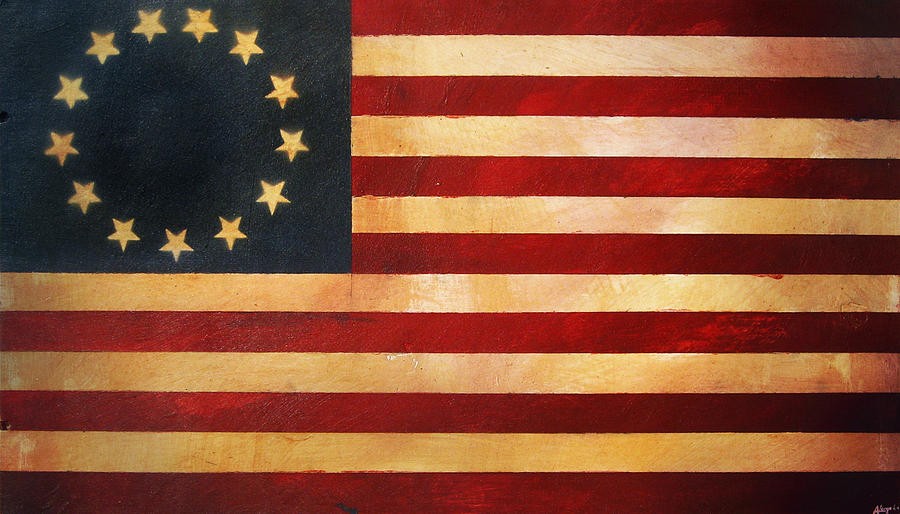
Tariffs, Taxes, and Taking Back America

What if I told you the key to rebuilding American industry and cutting your federal income taxes wasn’t magic—but tariffs?

Let’s cut to the chase: America has been bleeding industry, innovation, and independence for decades—and we’ve been told to smile while it happens. Meanwhile, the average American gets the privilege of funding the cleanup via federal income tax. What if I told you there’s another way?

Enter: tariffs. Not just as a tool for trade—but as a tool for freedom.

Tariffs Aren’t a Tax on You—They’re a Tax on Outsourcing

Every time we slap a tariff on a foreign good, we’re telling overseas manufacturers: “You want access to the American market? Pay for it.” That’s not oppression. That’s leverage.

We’ve let corporations ship jobs overseas and bring back products duty-free—then we make you, the American worker, cover the tax bill to keep the lights on in Washington. That’s backwards.

But here’s the kicker: if we returned to a tariff-based revenue model, like we had for most of this nation’s history, we could reduce—maybe even eliminate—federal income taxes for working Americans.

Yes, you read that right.

We Did It Before—We Can Do It Again

For the first 125+ years of this nation’s life, tariffs—not income taxes—funded the federal government. Roads, the military, infrastructure, even westward expansion—it was all bankrolled largely by taxing imports, not your paycheck.

The income tax didn’t become permanent until 1913. And ever since then? The burden’s been shifting downward. Away from corporations. Away from global interests. And straight onto your back.

Tariffs can flip that script.

This Isn’t Left or Right—It’s Red, White, and Blue

Want to help American workers? Tariffs do that.

Want to protect the environment? Tariffs punish polluting foreign factories.

Want fewer taxes? Tariffs generate revenue from global profiteers, not working families.

Want a secure national supply chain? Tariffs bring back domestic production.

This is policy that works for union welders and tech entrepreneurs. For farmers and factory workers. For independents, progressives, and conservatives alike.

It’s not about who’s in charge—it’s about who benefits. And that should be all of us.

Tariffs Make America Competitive Again

By leveling the playing field, tariffs allow American-made goods to compete against cheap, exploitative imports. That means more jobs here. More production here. More wealth here.

And when the economy thrives at home? Tax burdens can shrink. Entire revenue streams can shift from workers to importers, from citizens to foreign exporters who want a piece of our market.

It’s time to ask a simple question:

Why should you pay federal taxes when foreign competitors pay nothing to flood our shelves?

The Long Game: Build, Protect, and Prosper

Tariffs aren’t a magic wand—but they are a smart lever.

Used correctly, they can help rebuild our manufacturing base, protect critical industries, stabilize supply chains, and generate real revenue.

Imagine an America where your labor funds your life—not your government.

Where your paycheck stays with your family, and foreign companies are the ones footing the bill.

It’s not just possible—it’s patriotic.

Final Word: Let’s Play to Win

We’ve played nice for too long. We’ve played cheap for too long. And we’ve played dumb for way, way too long. Tariffs aren’t about isolation—they’re about insulation. They’re a smart, strategic way to put American interests first.

So next time someone says tariffs are old-fashioned, remind them:

So is freedom. And we’re long overdue for more of it.

If you believe in a future where Americans keep more of their income and rebuild their own prosperity—share this message. Let’s turn the conversation from division to production.


The Odds Don’t Lie: When Every Celebrity Kid is Suddenly Non-Binary

Hollywood no longer entertains—it engineers. Families are the target, and children are the battleground.

Decaying Hollywood sign at dusk, representing the entertainment industry’s moral collapse and its growing role in normalizing child grooming, ideological manipulation, and the erosion of childhood innocence.

Let’s talk numbers. Let’s talk common sense. And let’s talk about something that nobody in Hollywood wants to touch with a 10-foot glitter pole: the statistically impossible trend of celebrity kids all coming out as non-binary.

Case in point: Megan Fox. Talented actress, no question. But according to public interviews, all three of her children are being raised in an ultra-permissive environment where gender norms are not just challenged—they’re practically disassembled at the molecular level. One of her sons has been publicly dressing in traditionally feminine clothes for years, and Fox is proud of giving her children total freedom in how they express themselves.

Now I’m all for freedom. I served in the Navy to defend it. But here’s where I draw the line: let’s not pretend this is normal or statistically likely.

Because it isn’t.

If we’re generous and say that 5% of kids today identify as non-binary (some surveys push it that high for Gen Z), the chances of three children randomly doing so in the same family are about 1 in 8,000. And that’s the optimistic version. Real-world data pegs non-binary identification closer to 1–2% of the population. So we’re not talking about coincidence. We’re talking about outside influence.

Now before anyone starts foaming at the mouth and shouting “bigot,” let’s slow down. This isn’t an attack on anyone’s right to live how they want. It’s a question of why this trend is happening in elite, high-profile circles—and whether we’re allowed to question it without being digitally burned at the stake.

Because here’s what I see: a pattern. A very elite, very curated pattern.

These kids don’t just “happen” to all identify the same way. They’re growing up in homes where ideology is embedded into parenting. Where gender is taught as fluid, malleable, and even fashionable. Where parental approval might quietly hinge on how “progressive” or “unique” a child is willing to be. And where kids—smart, perceptive, approval-seeking as they are—may pick up on cues far earlier than most adults realize.

Let’s go even deeper. The circles these celebrities move in aren’t exactly bastions of grounded, morally clear leadership. We’ve got long-standing ties to figures like Jeffrey Epstein—who ran a global operation trafficking and abusing minors while rubbing shoulders with A-listers, politicians, and media moguls. More recently, allegations surrounding P. Diddy have surfaced, involving everything from abuse to trafficking to suspicious deaths, and suddenly a lot of famous “friends” are silent or backpedaling.

When you see how many of these elite social circles intersect, the idea that all of this is just a fluke? It gets harder to believe.

I’m not saying every parent is grooming their child or that every celebrity household is corrupt. I’m saying: where there’s smoke, we should be allowed to ask about the fire.

Because the same people who demand “trust the science” seem oddly quiet when the statistics stop making sense. The same media outlets that scream about “misinformation” won’t touch the wildly improbable trend of entire families of gender-nonconforming kids popping up like mushrooms in the same coastal zip codes.

Let me be clear: I believe kids should be safe, loved, and free to figure themselves out. But that includes the freedom not to be nudged, praised, or paraded into an identity they don’t fully understand—especially when they’re still forming basic ideas about who they are in the world.

In the end, this isn’t about left or right. It’s about honesty, statistics, and protecting kids from being turned into social currency.

Because when we stop asking questions, we stop protecting the most vulnerable among us.

References:

American Academy of Pediatrics. (2018). Ensuring comprehensive care and support for transgender and gender-diverse children and adolescents. Pediatrics, 142(4), e20182162. https://doi.org/10.1542/peds.2018-2162

Annotation: This policy statement outlines how gender identity is influenced by a combination of biological, psychological, and social factors—highlighting the role of parental and environmental input in development.

Bandura, A. (1977). Social learning theory. Prentice-Hall.

Annotation: A foundational psychological theory explaining how children learn behaviors, norms, and identities by modeling adults and peers—key to understanding how ideology and identity spread in households and communities.

Littman, L. (2018). Parent reports of adolescents and young adults perceived to show signs of a rapid onset of gender dysphoria. PLOS ONE, 13(8), e0202330. https://doi.org/10.1371/journal.pone.0202330

Annotation: This peer-reviewed study proposes that social and peer influences can play a significant role in sudden gender dysphoria, particularly when appearing in clusters—raising questions about external prompting.

Martin, C. L., & Ruble, D. N. (2004). Children’s search for gender cues: Cognitive perspectives on gender development. Developmental Review, 24(4), 522–558. https://doi.org/10.1016/j.dr.2004.08.003

Annotation: Explores how children form gender identity by processing social cues, expectations, and reinforcement from their environment—including parents and media.

Pew Research Center. (2022, June 7). About 5% of young adults in the U.S. say they are transgender or nonbinary. https://www.pewresearch.org/short-reads/2022/06/07/about-5-of-young-adults-in-the-u-s-say-they-are-transgender-or-nonbinary/

Annotation: Provides key statistical data to support the claim that nonbinary identity is rare—making the trend of multiple nonbinary children in a single celebrity family highly improbable without external influence.

Alexander, G. M., & Hines, M. (2002). Sex differences in response to children’s toys in nonhuman primates (Cercopithecus aethiops sabaeus). Child Development, 73(3), 847–861. https://doi.org/10.1111/1467-8624.00441

Annotation: Shows that while biological preferences may exist, gendered behavior is heavily shaped by environment—suggesting that social cues significantly influence gender expression.

American College of Pediatricians. (2016). Gender ideology harms children. https://acpeds.org/position-statements/gender-ideology-harms-children

Annotation: A position statement warning that premature affirmation of gender identity, especially in children, can do psychological harm and may reflect adult ideological projection.

Rethinking Reparations: What America Has Already Paid — and What That Means Today

The issue of reparations for African Americans is often oversimplified, particularly when critics claim that “everyone else has received reparations except Black Americans.” This narrative isn’t just historically inaccurate—it ignores the immense human, financial, and political costs America has already borne in the pursuit of racial justice.

Let’s cut through the noise. This isn’t about denying the horrors of slavery or the long shadow it cast. It’s about honesty, context, and asking whether it’s fair—or even wise—to suggest that America has done “nothing” to make amends.

Debunking the Myth: “Everyone Else Got Paid”

Native American Settlements Are Not the Same as Reparations

Native American tribes have received specific legal settlements tied to broken treaties and mismanaged federal trust funds. These include cases like Cobell v. Salazar, which led to a $3.4 billion trust settlement in 2009 https://doi.gov. But these were about specific legal breaches—not blanket payments for historical grievances. These funds were often too little, too late, and came with no direct benefits to the average non-tribal taxpayer.

Japanese-American Payments Were Narrow and Specific

In 1988, under the Reagan administration, surviving Japanese Americans who were interned during WWII received $20,000 each through the Civil Liberties Act. This only applied to 82,000 living individuals, not to their descendants https://govinfo.gov. It was an apology and a token amount—not a precedent for massive group reparations.

No, the U.S. Did Not Pay Holocaust Reparations

Contrary to popular belief, the U.S. has never paid reparations to Jewish Americans. Germany did, as the primary perpetrator. The U.S. provided refuge, military intervention, and post-war rebuilding aid through the Marshall Plan—not direct payments to Jewish citizens.

What America — and White Americans — Have Already Paid

The Ultimate Price: Hundreds of Thousands of Lives in the Civil War

Nearly 360,000 Union soldiers—most of them white—died to end slavery during the Civil War. This sacrifice represents the blood-price America paid to break the chains of bondage. That war bankrupted families, divided states, and cost lives for generations.

Generational Tax Burden for Welfare and Social Programs

Since the 1960s, trillions of taxpayer dollars—paid largely by white and middle-class Americans—have gone toward programs like Medicaid, food stamps, Section 8 housing, and public education. While not race-specific, these systems were explicitly expanded to close racial disparities during the War on Poverty and the Civil Rights Era https://census.gov.

Affirmative Action and Preferential Policies

For decades, affirmative action in universities, government contracts, and hiring practices gave African Americans a leg up in systems historically marked by exclusion. These policies affected generations of working-class Americans who were often told to “wait their turn” while diversity quotas took priority.

Millions Donated and Volunteered

From abolitionists and civil rights volunteers to conservative Christians and philanthropists, white Americans across the political spectrum have marched, funded, and defended Black progress. From churches to charities, the private sector has poured untold billions into community uplift.

Legal and Cultural Overhaul

Landmark laws like the Civil Rights Act, Voting Rights Act, and Fair Housing Act weren’t passed in a vacuum. These laws were enforced, funded, and defended by Americans of every race—including many white Americans who faced pushback from their own communities. Courts have spent decades ensuring those laws are upheld.

The Hard Truth About Modern Reparations Proposals

Most reparations proposals today are not about targeted restitution, but about redistributive justice. They propose cash payouts based on racial identity alone—not direct harm or provable injustice. That crosses a line that many Americans, regardless of color, view as morally and constitutionally problematic.

It’s not racist to question whether it’s fair—or even legal—to tax people who had no part in slavery to pay people who were never enslaved. That’s not justice. That’s ideology.

Conclusion: Accountability, Not Guilt

No nation is perfect, and America has never claimed to be. But it’s dishonest to act as if the country has ignored its past or done nothing to repair the damage. Between war, welfare, education, opportunity, and social upheaval, the United States has already paid a massive moral and financial debt.

If we’re going to talk about reparations, let’s do it honestly, with facts—not recycled myths or moral grandstanding.

Call to Action

  • Support fair, colorblind policies that benefit all Americans—especially the poor and underserved.
  • Push back against race-based redistribution disguised as justice. It’s time for solutions that unite us, not divide us.
  • Educate your peers. Share real history, not political slogans.
  • Encourage leaders to invest in opportunity zones, education, and entrepreneurship—not entitlement checks.

America doesn’t owe another apology—it owes future generations a chance to rise together.

Sources:

Anarchy in Skinny Jeans: Why Nobody Buys Antifa’s Act

You don’t earn credibility dressed like a Mortal Kombat extra, throwing bricks at businesses owned by the very working class you claim to defend.

Let’s get this out of the way: the name “Antifa” stands for “anti-fascist.” Sounds noble. Until you watch them operate. Then it starts to look less like a movement and more like a tantrum in black hoodies.

Antifa wants to be seen as a force for justice. Instead, they come off like a collection of rage cosplayers—more interested in smashing Starbucks windows than building anything real. They scream about fascism while acting like the Red Guard, issuing threats, canceling dissent, and using mob tactics to silence opposition.

And here’s the kicker: most people—left, right, and in between—aren’t buying it.

The Optics Are a Joke

You don’t earn credibility dressed like a Mortal Kombat extra, throwing bricks at businesses owned by the very working class you claim to defend. You don’t become a voice of reason when your playbook is pulled straight from 1930s street-fighting anarchists, minus the historical stakes and plus a Twitter account.

The mask might hide your face, but it also hides your humanity. It says, “I’m here to intimidate, not talk.” And when your idea of protest involves setting fire to your own city, the message gets lost fast. You’re not resisting tyranny—you’re giving people flashbacks of every failed ideological purge in history.

No Clear Message, No Clear Mission

Movements that matter have a mission. Civil Rights. Women’s suffrage. Labor rights. You knew what they stood for. Antifa? Ask ten members what they want, you’ll get ten different answers—if you can get one that doesn’t involve Marxist buzzwords or vague threats of “dismantling the system.”

They say they’re “against fascism,” but that’s a vague, emotional umbrella term now used to cover everything from actual authoritarians to someone who voted differently. When everyone is a fascist, no one is. And when your rallying cry is that thin, it gets real easy to dismiss you.

Violence Isn’t a Vision

Let’s be honest—Antifa isn’t organized political resistance. It’s disorganized anger with a logo. It’s broken windows, bike locks to the head, and spray paint slogans that read like a 14-year-old’s rebellion fantasy. When your “activism” depends on chaos, you’re not fighting for change—you’re looking for a fight.

Here’s the truth: most Americans aren’t interested in ideology by force. The more violent you get, the more you look like what you say you hate. People aren’t inspired by that—they’re repulsed by it.

The Internet Is Watching—and Judging

In the age of smartphones, every bad decision gets filmed. Every assault. Every flag burning. Every time some masked activist throws urine on a cop or screams at an old lady. That’s what people see. That’s what gets shared. And it becomes the brand.

It’s not a conspiracy. It’s not “bad framing.” It’s your own people, doing dumb things in broad daylight.

If you’re going to claim moral superiority, you better act like it. Otherwise, you’re just giving the other side endless ammo and confirming every stereotype.

The Irony Is the Loudest Part

Antifa hates the system. Hates capitalism. Hates America, at least in its current form. But where are they posting? Twitter. TikTok. Instagram. Wearing designer black hoodies made in third-world factories. Streaming from iPhones. Organizing via platforms built by the very “capitalist oppressors” they claim to be fighting.

You don’t burn down a local coffee shop and then Venmo your bail with a #FightThePower caption. That’s not rebellion. That’s cosplay. And people see right through it.

Conclusion: Rage Isn’t Enough

Antifa isn’t taken seriously because it doesn’t act seriously. It’s all performance, no substance. All outrage, no blueprint. Real movements inspire. They organize. They build. Antifa just breaks—and then blames everyone else when they’re not invited to the grown-up table.

You want to be heard? Then grow up. Drop the mask. Pick a cause. Show your face. Speak with clarity. Offer a solution. Until then, you’re just noise—and the world’s getting real good at tuning that out.

Don’t agree? Prove me wrong—with something better than a mask and a brick.

If We’re Talking Reparations, Let’s Talk About the Whole Slave Trade

Sold by Their Own: The Part of the Slave Trade No One Wants to Discuss
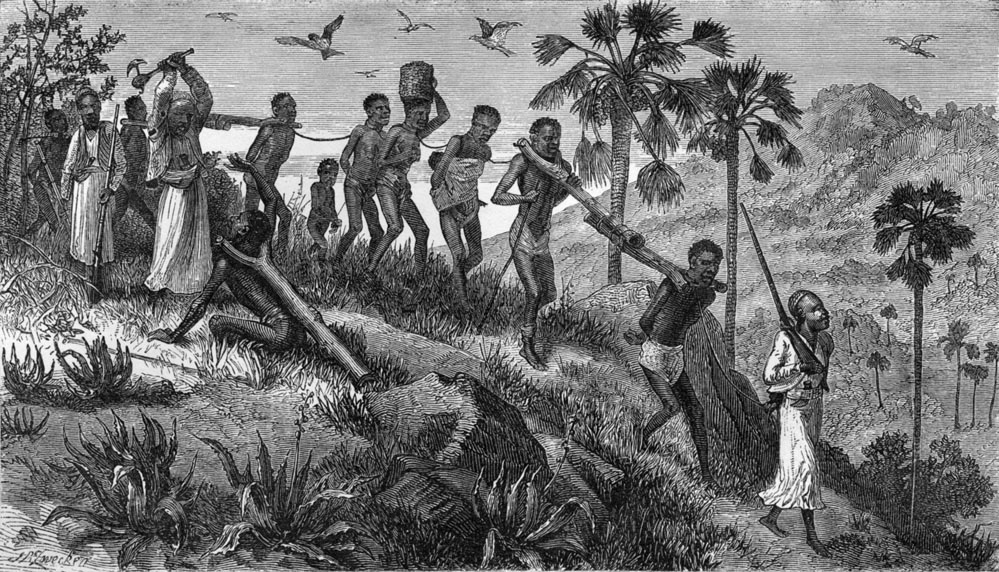
An 19th-century engraving depicting African slave traders transporting captives—highlighting the often-overlooked fact that many African kingdoms and groups actively participated in the transatlantic slave trade by capturing and selling their own people to European and Arab buyers. Image source: public domain illustration via historical archives.

The word “reparations” gets tossed around a lot these days. It’s become political currency—used by candidates chasing votes, activists scoring soundbites, and influencers generating rage-clicks. But if we’re going to seriously talk about reparations for slavery in America, we need to talk about something the loudest voices in the room conveniently ignore:

Slavery didn’t start on American soil. And white Americans weren’t the only ones responsible.

If we’re going to assign guilt, write checks, and rewrite policy in the name of historical justice, then let’s demand the full truth—not just the edited-for-activism version.

The Hypocrisy of a One-Way Blame Game

Here’s the narrative we’re sold: White Americans built a system of oppression through slavery, and Black Americans—regardless of lineage, income, or origin—are owed compensation by today’s taxpayers. That’s the story pushed in major media, academic circles, and even in some local and state governments.

But there are a few glaring problems with that version of history.

For one: Africa wasn’t a victim-only continent. Long before Europeans arrived, slavery was already an institution within Africa. Tribes and kingdoms didn’t just tolerate it—they profited from it. They captured and sold other Africans—often from rival tribes—into the transatlantic slave trade.

The Ashanti, Dahomey, and Oyo kingdoms, among others, ran full-scale economies around capturing and selling slaves to Portuguese, Dutch, British, and eventually American traders. These weren’t passive bystanders—they were the suppliers.

If you’re demanding reparations from the buyer, shouldn’t you also demand it from the seller?

Who Owes Whom?

Let’s break it down logically.

If the theory is that descendants of slaveholders owe money to descendants of slaves, then shouldn’t that include all who were involved in the transaction?

  • African nations whose economies were built on slave trading.
  • Arab empires that trafficked in African slaves centuries before Europeans did.
  • Black American families who can trace their ancestry back to African slave-trading tribes.

Yes, that last one stings—but if the logic is “guilt travels through blood,” then guilt doesn’t discriminate. You can’t say a white rancher in Wyoming owes reparations for something his family never took part in, while ignoring African empires that actively participated for centuries.

That’s not justice. That’s political theater.

Let’s Talk About Cost

The U.S. fought a civil war that cost over 600,000 lives—ending slavery at the cost of national bloodshed. That war broke the back of slavery in America. You could argue that was the first and most painful “reparation” this nation paid.

And since then?

  • Affirmative action
  • Race-based hiring and college admissions
  • Billions in targeted federal and local programs
  • Generational welfare systems
  • DEI initiatives embedded into government and corporate policies

If none of that counts, then what does? If reparations mean an unending tab that current generations—many of whom are the children of immigrants—must keep paying forever, then it’s not justice you’re seeking. It’s vengeance.

What Accountability Really Looks Like

I’m not arguing slavery wasn’t evil. It was. Every person with a conscience acknowledges that.

But true accountability means looking at the entire picture. Not just pointing fingers at modern-day Americans who had nothing to do with slavery while ignoring the African elites who started the trade.

If reparations are about responsibility and justice, then justice demands consistency. Start with Africa’s role. Call out the kingdoms that enslaved their neighbors and got rich off it.

Ask why no one is demanding Ghana, Benin, or Nigeria pay reparations alongside the U.S. If the pain is real, then the blame should be complete.

Final Thought, Without The Noise

If your argument for reparations ignores who sold the slaves, then it’s not an argument—it’s a hustle.

History isn’t here to make us feel good. It’s here to remind us where we come from and how not to repeat our worst instincts.

You want reparations? Fine. But let’s talk honestly. Let’s talk globally. And let’s stop pretending this is a one-way street.

Signal over noise. Always.

Call to Action

If you’re tired of rage-bait history lessons and selective outrage, share this post. Email it. Talk about it at your dinner table. Demand history—not ideology—from your schools, your media, and your elected officials.

Truth doesn’t need a marketing campaign. It just needs enough people willing to say it out loud.

Sources

Comments are open below. Keep it civil or keep it moving.

You Can’t Cherry-Pick Carnage: The Hypocrisy of Vegan Extremists

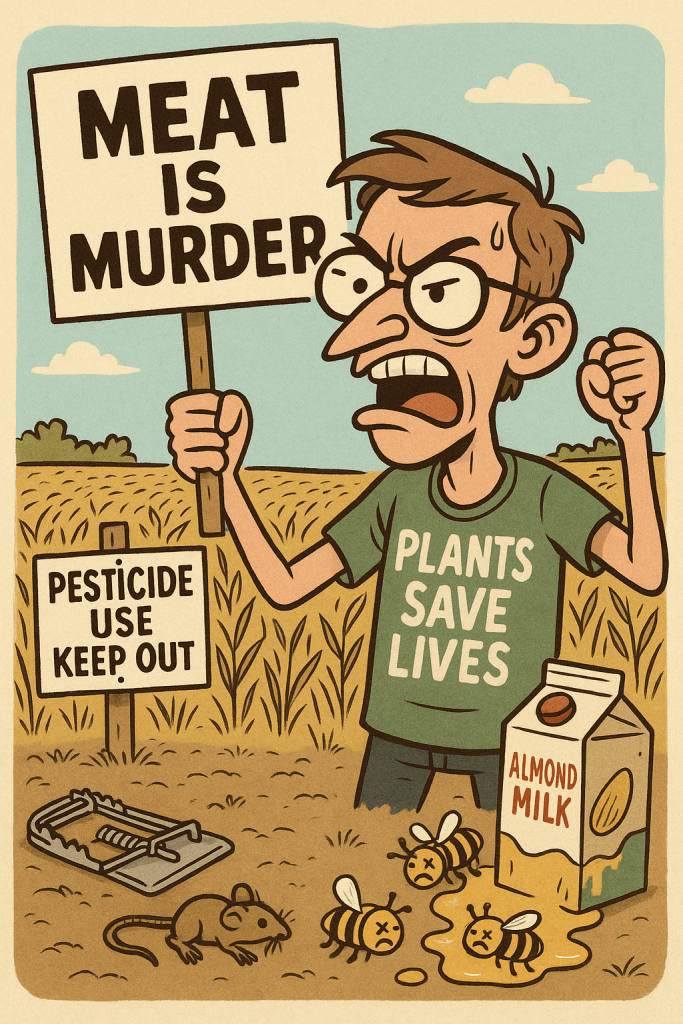
All animals are equal—unless they die under a wheat harvester.

Let’s get something straight from the jump: I’m not here to bash vegans. If someone chooses a plant-based lifestyle for health, environmental, or ethical reasons—more power to them. Live your values. Respect. But what I do have a problem with are the self-righteous extremists who scream from their tofu-scented soapboxes that meat-eaters are murderers while conveniently ignoring the blood on their own kale-stained hands.

Sound harsh? Maybe. But truth often is.

Because here’s the uncomfortable reality: the agriculture industry—the very engine behind all those grains, fruits, and vegetables that form the backbone of a vegan diet—is responsible for killing billions of animals every year. Not for meat. Not for leather. Not for fur. For crops. For soy. For almonds. For wheat. For tofu.

Let’s talk numbers. According to a 2003 study published in the journal Animal Welfare, it’s estimated that over 55% of all animal deaths caused by agriculture in Australia came from plant crop production, not animal farming [1]. That’s things like mice, rabbits, snakes, birds, and insects slaughtered en masse by harvesting equipment or poisoned by pesticides. In fact, a field of grain is a deathtrap for small animals.

But the numbers don’t stop there. A study from the University of Oregon estimated that a diet of plants still results in more than 15 times more animal deaths per hectare than a pasture-raised beef diet [2]. In other words, grass-fed beef may actually cause fewer animal deaths than a bowl of lentils grown on a commercial farm. Let that sink in.

Now, to be clear, this isn’t about saying meat is morally superior to vegetables. It’s about pulling the wool out of our eyes and facing the full picture. The ethical high ground extremist vegans claim to stand on? It’s built on a foundation of field mice skulls and insecticide residue.

Here’s another kicker: not all vegan food is “clean.” Consider almond milk, the darling of dairy-free coffee drinkers. Almond farming, especially in places like California, devastates honeybee populations through mass pollination practices that literally work bees to death. Commercial beekeeping for almond farms has been linked to widespread colony collapse [3]. Yet, I don’t see many vegan influencers boycotting almond milk or calling for systemic reform there.

Same with soy. The monoculture of soybeans—largely driven by both vegan and livestock feed markets—is wiping out biodiversity across South America, contributing to deforestation, water pollution, and habitat loss on a massive scale [4]. Irony, thy name is tofu.

But what’s the reaction when these facts are brought up in conversation? Crickets. Or worse, smug deflections like, “Well, at least I’m not eating animals.” No, you’re not. You’re just supporting an industry that kills them by the billions—quietly, indirectly, and under the radar.

Now, if you’re a vegan who acknowledges this, who makes conscious choices to support regenerative agriculture, local farming, or wildlife-friendly practices—again, respect. Truly. But if you’re the type to shame others while pretending your quinoa salad doesn’t drip with collateral damage, you might want to sit this one out.

We don’t need more purity tests. We need honesty. And nuance. And maybe a little humility.

So what’s the takeaway here? Whether you’re a carnivore, omnivore, vegetarian, or vegan, the real battle isn’t each other. It’s factory farming, monoculture, and the blind consumerism that feeds the machine. That’s where the real damage is done.

Call to Action:

Start asking where your food comes from—all of your food. Support local farms. Choose regenerative practices when you can. Be willing to acknowledge that no diet is 100% guilt-free, and let that awareness guide you toward better choices—not louder judgment.

Because the truth is: we all have blood on our plates. The question is, what are we doing about it?

References:

Lamey, A. (2007). Food Fight: The Case for Ethical Vegetarianism. Journal of Animal Law, 3(1).

Davis, S.L. (2003). The Least Harm Principle May Require that Humans Consume a Diet Containing Large Herbivores, Not a Vegan Diet. Journal of Agricultural and Environmental Ethics, 16(4), 387–394.

United States Department of Agriculture. (2020). Honey Bee Colonies. https://www.nass.usda.gov

WWF. (2021). The Impact of Soy: A Growing Threat. https://www.worldwildlife.org

Pollan, M. (2006). The Omnivore’s Dilemma: A Natural History of Four Meals. Penguin Press.

Broom, D.M. (2012). Sentience and Animal Welfare. CABI Publishing.

Trewavas, A. (2001) Urban Myths of Organic Farming. Nature, 410(6834), 409–410.

To the Heart of the Home: A Mother’s Day Reflection


Today, let’s pause

Not because Hallmark told us to, not because the brunch spots are full, but because deep down, we know: she deserves this day—and a thousand more like it.

Mother’s Day isn’t just about flowers or cards (though those are nice). It’s about honoring the quiet strength, the late-night pep talks, the scraped knees kissed better, and the unwavering belief she placed in us—even when we didn’t believe in ourselves.

A mother is memory keeper and future builder. She’s the reason we stand tall, the voice that told us we could when the world said we couldn’t. Whether she gave us life, raised us, loved us from near or far, or stepped in when we needed her most—she shaped us.

And maybe your mother is no longer here, or your relationship is complicated. That’s real too. Take a moment to honor whatever form love took—or still takes. Maybe it’s in a handwritten note tucked away in a drawer, or a recipe passed down through generations. Maybe it’s in the way you show up for others.

To all the mothers, stepmothers, grandmothers, aunties, and stand-in moms who fill this world with grace and grit: thank you. For every sleepless night, every hard decision, every fierce defense of your children’s hearts—you are seen.

Happy Mother’s Day.

You are the heart of the home, and today, we celebrate you.

#MothersDay #Gratitude #FamilyFirst

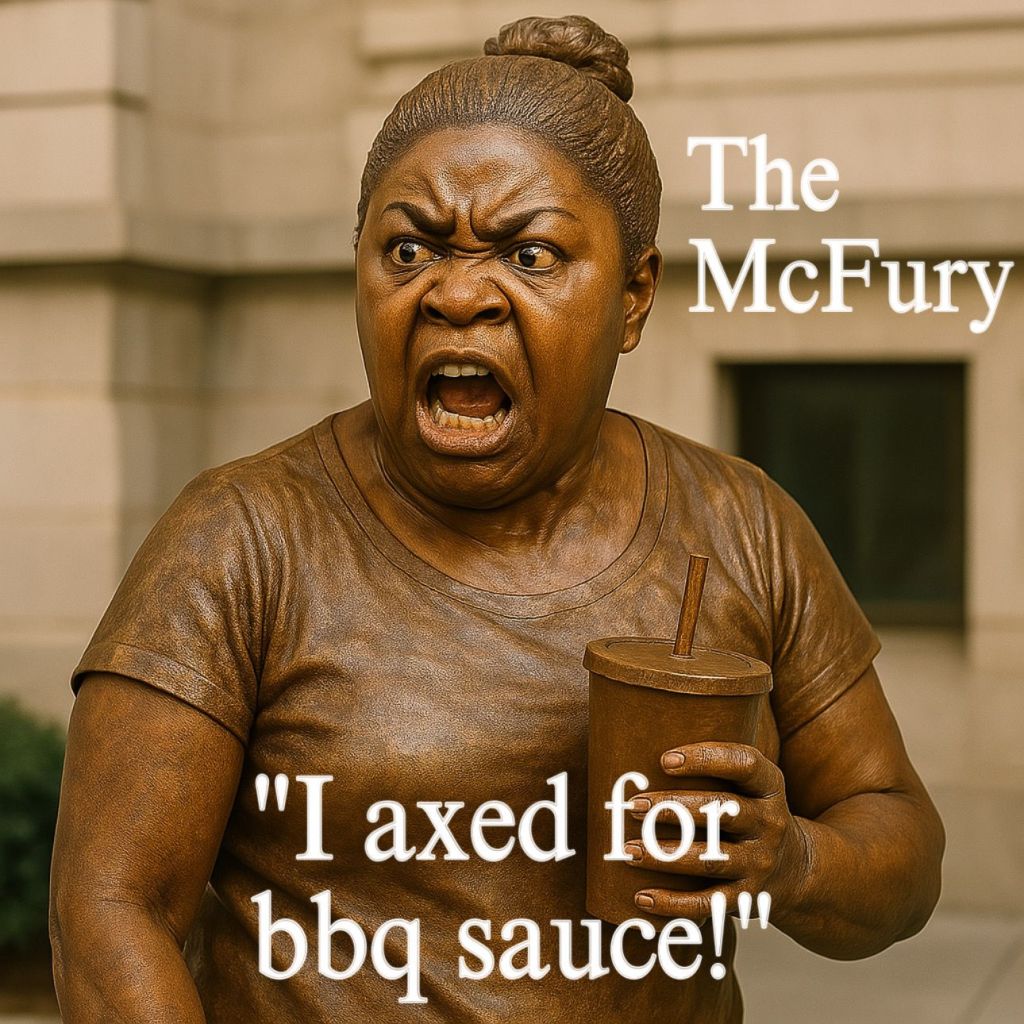
The McFury: “I Axed for BBQ Sauce!”

My personal take on the new Times Square statue

It starts the same way every time. The camera rolls. A woman of color is screaming at the counter staff over a wrong order—usually sauce. She hops the counter. Throws food. Threatens violence. Sometimes she attacks employees. And the internet eats it up.

The clip goes viral. Comment sections explode. And like it or not, her actions become the headline for every woman who looks like her.

It’s Embarrassing—and It Needs to Stop

Let’s not sugarcoat this. These public freakouts are disgraceful. They’re not “empowerment.” They’re not “fighting for respect.” They’re temper tantrums in adult bodies. Over a slight inconvenience.

You don’t gain respect by acting like a maniac. You lose it. For yourself—and for everyone who looks like you.

Fast Food Rage Makes the Whole Demographic Look Unstable

When a woman of color behaves like this in public, it’s not seen as her acting out—it’s seen as them acting out.

It reinforces every negative stereotype about being aggressive, irrational, entitled, and violent. And once it goes viral, the damage is done. The clip doesn’t say, “Here’s one person losing control.” It says, “Here’s how these women act.”

Is that fair? No. But it’s reality. And pretending otherwise is delusional.

You’re Not “Demanding Respect” by Disrespecting Everyone

Too often, this behavior is excused under the banner of “not being disrespected.” But flipping out over a service mistake doesn’t make you powerful. It makes you pitiful.

Respect isn’t demanded through screaming—it’s earned through how you carry yourself. And tearing down a fast food counter over chicken nuggets just proves you have none.

Viral Fame Isn’t Worth Your Reputation

What do these women actually gain from going viral? Five seconds of internet fame—and a lifetime of being remembered for acting like a lunatic in a drive-thru.

Jobs lost. Faces recognized. Mugshots posted. Nothing about that is “boss energy.” It’s self-destruction on full display.

This Isn’t Just a You Problem—It’s an all of you Problem

Whether you like it or not, your behavior reflects on the entire group. That’s how stereotypes work. One person’s outburst becomes the world’s new bias.

Women of color already face enough hurdles. Why add fuel to the fire with public behavior that confirms every racist assumption society throws at you?

You don’t beat the system by proving it right.

Final Thought

You axed for BBQ sauce. You didn’t get it. So you lost your mind.

You didn’t just embarrass yourself. You reinforced a damaging image that women of color have fought for decades to undo. And for what? A packet of sauce?

You want respect? Start by acting like someone who deserves it.

Because no matter how you slice it, a meltdown in McDonald’s isn’t a flex—it’s a failure.

If you’re tired of watching your community get defined by the loudest, wildest, and most reckless among you, speak up. Share this. Start the conversation. Hold each other accountable. Because silence is complicity—and every meltdown caught on camera drags all of you down with it. Dignity is a choice. Make it loud.

#womenofcolor #publicoutbursts #fastfoodfreakouts #stereotypes #accountability #respect #viralculture #culturalreflection

Being Offended Doesn’t Make You Right. It Makes You Sensitive.

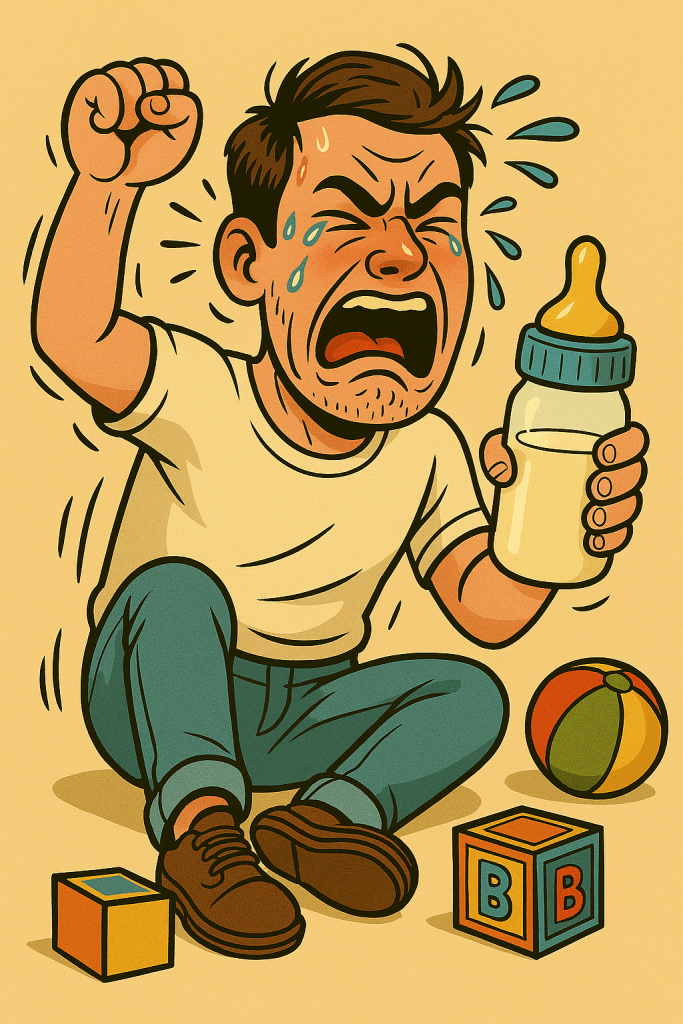
A cartoon illustration of a grown man having a toddler-like tantrum. He is sitting on the floor, crying loudly with tears streaming down his face, clutching a baby bottle in one hand and raising the other fist in frustration. Surrounding him are colorful children’s toys, including blocks and a beach ball, emphasizing the infantile behavior.

Let’s be clear: being offended is not a virtue. It doesn’t mean you’re morally superior. It doesn’t mean you’re right. It means you felt something—and that’s fine—but feelings don’t equal facts, and emotions don’t give you authority.

The Rise of Fragility as a Weapon

In today’s culture, offense is a currency. People cash in on hurt feelings like it’s a winning lottery ticket. Say something blunt? Offensive. Quote a statistic? Offensive. Ask a hard question? You guessed it—offensive.

And once someone throws the “offended” card on the table, it’s supposed to stop the conversation. That’s the play. Not to engage, but to silence. To control.

But here’s the truth: if your argument crumbles under disagreement, maybe it wasn’t that strong to begin with.

Sensitivity Isn’t Strength

We’re told sensitivity is a virtue. That the most fragile among us deserve the most power. That those who cry the loudest deserve the floor.

But strength isn’t about melting at every harsh word. Strength is knowing who you are, standing your ground, and letting petty insults roll off like water on wax.

The Founders weren’t sensitive. They were men who got insulted, ridiculed, and threatened—and still went to war for what they believed. They weren’t crying about microaggressions. They were building something that would last.

You don’t build a nation—or a backbone—by catering to the perpetually offended.

The Free Speech Double Standard

Watch how it plays out: “free speech” is sacred when it’s used to mock faith, tear down tradition, or push the latest progressive crusade. But the moment a conservative says something blunt, biblical, or unapproved? Canceled. Labeled. Silenced.

We didn’t sign up for a world where speech needs a permission slip. Being offended doesn’t give you the right to shut someone down. It gives you a choice: argue back or walk away. What it doesn’t give you is control.

Offense Is Inevitable. Accountability Is Optional.

Let’s face it—everyone is offended by something. But the difference is how you deal with it. Do you cry foul and call for heads to roll? Or do you challenge it, debate it, and move on?

You can’t outlaw discomfort. You can’t legislate hurt feelings. But you can build resilience. You can teach your kids to think critically instead of emotionally. That used to be common sense. Now it’s counterculture.

Truth Doesn’t Care About Your Feelings

Reality is cold. It doesn’t bend to emotion. It doesn’t pause for your trauma. And the truth? The real, unfiltered, hard-edged truth? It’ll offend everybody eventually.

And that’s good.

Because truth that never offends is truth that never challenges. And unchallenged lies become the culture’s foundation.

We live in a time where being right matters less than being nice. But niceness isn’t what built the world. Conviction did. Courage did. Uncomfortable, stubborn, offensive truth did.

Final Word

So the next time someone tells you they’re offended, nod politely and ask: “So what?”

Their feelings don’t override your facts. Their offense doesn’t cancel your point. And their sensitivity doesn’t put them in charge.

This country was built by people who risked offense to speak truth. It won’t survive if we hand it over to those who cry every time someone does.

Offended? That’s your problem. Not mine.

Call to Action:

Stop apologizing for telling the truth. Stop letting hurt feelings rewrite reality. This country needs more conviction, not more coddling.

Stand firm. Speak plainly. And never trade truth for approval.

If you’re tired of walking on eggshells, you’re not alone—you’re the resistance.

Be bold. Be clear. Be unoffendable.

The Man or Bear Debate: A Symptom of Cultural Rot

There’s still a viral debate making the rounds. Would you rather be alone in the woods with a man? Or would you prefer to be with a bear?

A lot of women are loudly and proudly choosing the bear.

Let’s be blunt. That’s not empowering. That’s not clever. That’s broken thinking.

The Mixed Message

These same women will post about needing a “real man.” They want a protector and a provider. They want someone who opens doors and kills spiders. They also look for a man who makes six figures and knows how to fight off a home intruder. Additionally, he should be capable of crying on command. They want safety and security. But, they hesitate to admit this publicly. They see men as more dangerous than a wild animal with claws and killer instincts.

You want protection but say you’re safer with a predator? You want men to stand up and shield you from danger, but treat them like the danger?

That’s not equality. That’s hypocrisy.

Let’s Be Clear

The average bear will maul you if it’s hungry, scared, or territorial. The average man? He’ll move aside on a trail, say hello, maybe offer to help if you’re lost or injured.

Men—especially the ones who were raised right—are wired to protect. Not prey. Pop culture and clickbait feminism have twisted the narrative. Masculinity is now treated like a red flag instead of a lifeline.

Trust the Bear, Hate the Man?

This isn’t just a dumb meme. It’s a window into how twisted the public conversation around men has become. If you say a bear is safer, then you’re implying masculinity is about violence. You’re also suggesting it’s about threat and fear.

You’re also ignoring reality. Women are far more likely to be protected by a man in a crisis than harmed by one. Law enforcement? Mostly men. First responders? Mostly men. The guy who changed your tire or walked you to your car because it was dark? Men. Not bears.

Cultural Gaslighting

You can’t build a culture where men are expected to defend society while at the same time demonizing them. You can’t raise boys to be honorable and courageous. This is especially true if you’re teaching girls that those boys are inherently untrustworthy or violent.

That’s cultural gaslighting. And the worst part? It’s tolerated—even celebrated—in the name of “empowerment.”

What it really is: fear-mongering dressed up as feminism.

A Call for Sanity

Look, it’s okay to want safety. It’s okay to be cautious. But it’s not okay to create a society where half the population is treated like potential threats based on nothing but gender.

That’s not justice. That’s cowardice.

Men aren’t perfect. Neither are women. But if your knee-jerk answer to “man or bear” is bear, you’re not making a feminist statement. You’re proving how badly the culture has failed at building trust, respect, and common sense between the sexes.

Let’s bring back reality. Respect isn’t gendered—it’s earned. And trust can’t survive in a world where men are only valuable until they’re feared. Want better men? Start by treating them like humans, not monsters.