About Me
Veteran. Husband. Father of three firebrands. I’m a Gen X realist standing at the crossroads of chaos and clarity, armed with a camera, a cigar, and a deep respect for truth over trend.
This blog is where I cut through the noise—sharing hard-earned wisdom, stoic insights, and unfiltered commentary on modern life, marriage, masculinity, and meaning. I believe in personal responsibility, legacy over likes, and that peace isn’t found in comfort—it’s forged in discipline.
You won’t find fluff here. Just real talk, seasoned perspective, and the occasional dad joke.
Pull up a chair. Let’s get to work.
Every time there’s a mass shooting in America, you can set your watch by the response. Democrats rush to the microphones, and before the victims’ names are even known, they’re pointing at the gun. Always the AR-15, always “weapons of war,” always “we need more laws.”
That’s not just lazy—it’s deliberate. It’s a way to keep the spotlight off the uncomfortable truth: in the vast majority of these tragedies, the shooter isn’t the faceless “angry white conservative male” the media loves to paint. It’s usually someone with a long history of mental instability, and more often than not, their leanings don’t fit the right-wing stereotype. But because that doesn’t play well in the mainstream narrative, it gets pushed aside while the gun takes center stage.
The inconvenient profiles
Take Parkland. The shooter was flagged multiple times—police visits, school warnings, even the FBI got tips. Nothing was done. But when the smoke cleared, Democrats zeroed in on the rifle.
Look at Nashville. A transgender-identifying shooter with a documented history of mental struggles. Media outlets went out of their way to downplay the identity angle, but they had no problem blasting the gun across every chyron.
Or Uvalde. The shooter posted violent threats online. Family members raised red flags. Again, ignored until it was too late. The coverage? Wall-to-wall focus on “assault-style weapons.”
The real shift
Let’s be honest here—guns aren’t new. Firearms have been in American hands for centuries. Semi-automatic rifles have been around for over a hundred years. What’s new is the culture. We live in a society that glorifies rage, celebrates victimhood, and pushes identity politics while quietly sweeping real mental health issues under the rug.
And our institutions? They’ve failed. Schools, law enforcement, social services, all of them miss warning signs again and again. Afterward, everyone wrings their hands, and Democrats go back to the same talking point: ban the gun. It’s political theater, nothing more.
Why blame the tool?
Because blaming the shooter means facing hard questions. Why was this person ignored when they made threats online? Why weren’t prior arrests or red flags taken seriously? Why do we dump billions into government programs that never seem to stop the very people we all knew were ticking time bombs?
Pointing at the gun is easy. It gives politicians a shortcut. It lets them push for policies they already wanted, while dodging accountability for the failures that actually allowed the shooting to happen. It’s about control, not solutions.
The bottom line
A gun can’t think, plan, or hate. A gun doesn’t walk into a school or a mall on its own. A person does. And until we start talking about who those people are—and why they’re snapping—we’ll keep running in circles, blaming the tool while ignoring the root.
No one wants to admit it, but here’s the truth: we don’t have a gun problem, we have a people problem. And the longer we let Democrats and the media deflect from that, the worse this is going to get.
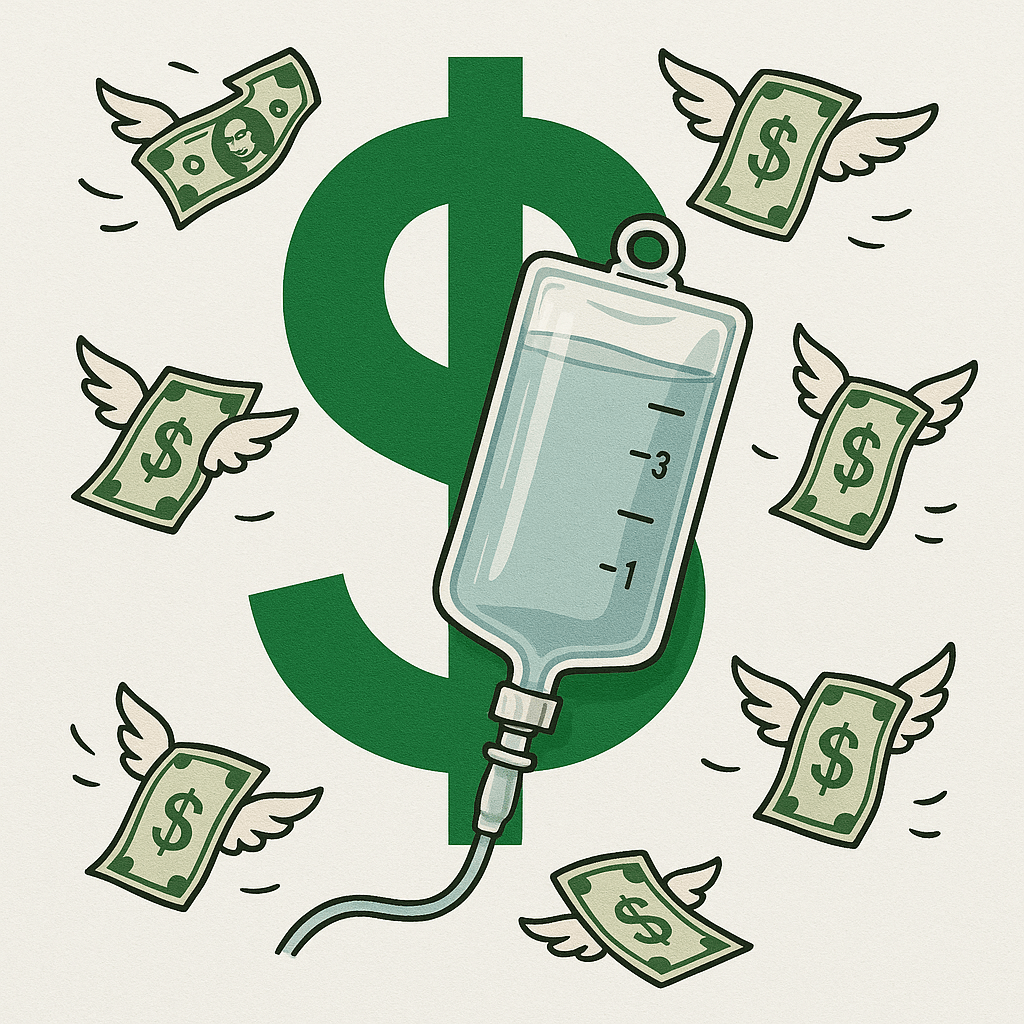
That 9 dollar saline bag we provided will be 500 dollars please
Let me cut through the noise: The U.S. hospital system isn’t broken — it’s rigged. If you’ve ever wondered why a ten-dollar IV bag turns into a $1,400 line item on your bill, or why you can’t bring your own damn medical supplies to your own damn surgery, buckle up. It’s not incompetence. It’s business — and you’re the mark.
“We Can’t Let You Do That, Dave”
I work directly with hospital supply chains. I know what they pay. I know what they stock. I know the markup games. So when I ask, hypothetically: “What if I source the same surgical supplies from the same vendors you do, sterilized and traceable, and bring them to my procedure to cut out the insurance middleman?”
The answer is always the same: No.
Not because it’s impossible. Not because the items wouldn’t be safe. But because it bypasses the profit machine. Control, liability, and revenue come first. Patient choice? Dead last.
The Profit Loop They Don’t Want You To See
Hospitals pay $300 for a biologic implant.
They bill $18,000 to your insurance.
Insurance pays $8,000 after “discounts.”
You owe $2,000+ out of pocket — if you’re lucky.
None of this reflects the actual value of the item or service. It reflects what the hospital can get away with. And they will fight tooth and nail to keep it that way.
Why Hospitals Won’t Let You Bring Your Own Supplies
Here’s the standard excuse list:
“We can’t verify the sterility.” Even if you bought from their exact vendor? Doesn’t matter. If it didn’t go through their warehouse and tracking system, it’s a no.
“It’s a liability issue.” Liability is their favorite excuse. Conveniently, it also protects their pricing model.
“It’s against policy.” Translation: “It would cost us money.”
The truth? They don’t want the dam to break. If patients could see what this stuff really costs — or worse, supply it themselves — the entire financial model collapses.
Let’s Be Blunt: This Is Ransom, Not Healthcare
You’re not paying for care. You’re paying to access the hospital’s sandbox. It’s “play our game or die.” Bring your own tools? Not allowed. Ask too many questions? Good luck getting cooperation.
This isn’t about healing people. It’s about preserving margin. “Nonprofit” hospitals are buying up real estate, padding executive salaries, and sending working families to collections over a CT scan.
There Is a Way Out — But It’s Not Through Them
Cash-pay surgical centers (like Surgery Center of Oklahoma) are transparent, honest, and dramatically cheaper.
Self-insured employers are starting to contract directly with providers — cutting hospitals out entirely.
Medical tourism can get you better care at a fraction of the cost — if you’re willing to fly.
Some surgeons are fed up too. Find the right one and you might be able to work directly — no games.
Until we start demanding better, we’ll keep paying into a system that robs us blind and pats itself on the back for “saving lives.”
Call to Action
Stop playing along. Ask for itemized bills. Demand cash-pay quotes. Question every charge. And if you work in healthcare like I do? Start speaking up.
The system only wins if we all keep pretending it isn’t a scam.
The author is a hospital supply chain specialist, Navy vet, Gen X realist, and truth-teller in a world full of corporate noise. When he’s not managing inventories, he’s calling out the BS where it counts.
This is fatherhood: not loud, not flashy—just real. A steady hand, a quiet example, and a lifetime of lessons passed down without saying a word. Happy Father’s Day to the men who show up, stand tall, and shape the next generation by living it right.
The Most Invisible Month of the Year
June. It’s loud. It’s colorful. It’s full of parades, hashtags, and flag-waving. And somewhere in the back corner of the calendar, two things quietly sit next to each other, mostly ignored: Father’s Day and Men’s Mental Health Awareness Month.
You probably didn’t see too many headlines about either. You won’t find many TikToks or trending hashtags. There’s no Spotify playlist for it. But here we are—mid-June—and it’s time we talk about the men behind the silence.
Because this isn’t just another Hallmark holiday. It’s a chance to acknowledge something deeper: the quiet sacrifices, invisible burdens, and unspoken battles of fathers across the country who keep showing up, even when no one sees them.
The Dad Nobody Checks On
Fatherhood today isn’t just about mowing lawns and telling bad jokes (though we’re elite at both). It’s about being the rock. The fixer. The provider. The protector. The emotional anchor.
And here’s the part no one likes to admit: we don’t check on dads.
We ask a lot of them—but rarely ask them how they’re doing. The world expects them to be bulletproof, unbothered, unfazed. And when they crack under pressure, people act shocked.
“He never said anything.” Yeah. Because when he did say something, you either didn’t listen—or you used it against him later.
This month—Men’s Mental Health Month—is supposed to be a reminder that men feel too. That strength doesn’t mean silence. And that vulnerability shouldn’t be weaponized.
The Fatherhood Strain No One Talks About
Let’s be honest. A lot of men are quietly breaking. They’ve learned to suppress it because somewhere along the line, someone taught them that emotion equals weakness.
They’re the dads holding the household together after a 60-hour workweek. The ones missing sleep over bills, burnout, and broken promises. The veterans haunted by things they can’t unsee. The single dads stretching themselves thin to give their kids what they never had.
They walk into Father’s Day with a forced smile, hoping for a moment of peace—but usually just end up manning the grill while everyone else talks about the NBA Finals.
Where’s the Celebration for the Steady Hands?
We throw confetti for loud identities, but we forget the ones quietly building legacies. The men who never ask for thanks, because they were raised to think that gratitude is earned in silence.
We’ve reached a place where masculinity is misunderstood, fatherhood is undervalued, and men’s mental health is practically invisible unless it ends in tragedy.
It shouldn’t take a funeral or a folded flag to realize what a man was carrying.
This Father’s Day, Do Something Different
Call your dad. Not a text. A real call. Ask him how he’s doing—and mean it.
Thank a father figure in your life. Coaches, mentors, stepdads. They all matter.
Check on your buddy who’s a dad. The one who never complains? Yeah, especially him.
Stop mocking men who speak up. It takes guts to be vulnerable in a world that expects stoicism.
We don’t need a parade. We don’t want a movement. We just want a moment. A little space. A little honesty. A little respect for what men carry and how rarely they let anyone see it.
Real Strength Isn’t Loud
Real strength is the guy who keeps showing up when he’s exhausted. Who keeps giving when his tank is empty. Who fixes the broken stuff, pays the overdue bills, takes the hard job, and still hugs his kids at the end of the day.
It’s the man who walks through storms, not because he wants to—but because he knows if he doesn’t, no one else will.
This Father’s Day, let’s honor that kind of strength. The quiet kind. The selfless kind. The kind that makes the world go ’round… even when no one’s watching.
Call to Action: Check on the Rock
So here’s your reminder: check on the rock. Check on the one who’s always “fine.”
If you’re a man reading this and you’re struggling—you’re not broken. You’re not weak. You’re human. And there’s no shame in that.
To all the dads out there grinding in silence, holding the line, and doing the best they can—you matter. Not just today. Every day.
Share this. Say something. Be the difference. And yeah, still make a bad dad joke while you do it. You’ve earned that right.
We’re not talking flying cars. We’re talking flying realities.
Let’s Start With the Basics: What the Hell Is a Type 5 Civilization?
On the Kardashev Scale (a way to measure a civilization’s energy mastery), we humans are somewhere around Type 0.72. We’re still burning ancient algae for fuel, arguing about plastic straws, and rebooting routers like cavemen.
Type 1 uses all the energy of its home planet. Type 2 taps the full power of its star. Type 3? Galactic-level dominance. Type 4? Cosmic-level. And then there’s Type 5.
A Type 5 civilization manipulates energy across universes. Plural. It’s the stuff Marvel villains daydream about. Reality is a sandbox. Time is a suggestion. And causality is a plaything for post-biological beings made of consciousness, code, and cosmic spice.
So What’s a Typical Day Like?
☕ Morning Routine: Simulate a Galaxy Before Breakfast
Your alarm doesn’t “go off.” You just reintegrate into the version of yourself that wants to be conscious again. You don’t shower. You swap timelines for one where you already feel clean, caffeinated, and vaguely proud of yourself.
Coffee? Nah. You just pull the molecular flavor of dark roast into your mouth by thinking about it. Calories don’t exist—unless you feel nostalgic and toggle “biological mode” like putting on an old leather jacket.
🌌 Work: Engineering the Birth of a Universe
Your job isn’t pushing paper. It’s designing physics for newborn universes. Want to invent a cosmos where water burns and gravity is a punchline? Sure. Need a realm where time flows sideways? Done before lunch.
Some beings run simulations to test for emergent life. Others just do it for art. Reality design is the graffiti of the gods, and you’re Banksy with a quasar.
🎮 Recreation: Infinite Multiplayer Mode
Bored of normal universes? Hop into a shared multiversal construct: think “ready player one” but with fractal dimensions and a difficulty setting called “Eldritch Terrorcore.”
You can spend eons in a simulated lifetime as a medieval blacksmith, a spacefaring coral reef, or a sentient cloud that writes poetry about solar winds. No judgments. Everyone’s weird here.
🎭 Social Life: Dinner with Other God-Minds
Meeting friends means syncing minds at the quantum level. Want to know what it feels like to experience the color “regret” as a sound? Ask a buddy from Universe 847-Z. They’ll show you using emotion-based transmission beams and snacks shaped like nostalgia.
There’s no small talk. Everyone’s seen everything. Instead, you debate things like “Should we merge two timelines where frogs invented capitalism?” or “Do we delete entropy today or let it ride?”
🛏️ Sleep: Optional but Retro
Sleep is a software patch, not a necessity. But some beings still “dream” in elaborate compressed narratives just for the artistic value. Some dream entire civilizations, and the dreams themselves evolve sentience. It’s like watching your thoughts go viral in real time.
But Is There Still Purpose?
Here’s the kicker: once you can do anything, the question shifts to “What’s worth doing?”
Some beings explore meaning. Others reinvent limitations so challenges still exist. A few even choose to be reborn in primitive realities—like ours—just to feel friction again.
Turns out, when you’re omnipotent, simplicity starts to look pretty exotic.
Final Thought from a Type 0.72 Meatbag:
We’re a long, long way from Type 5. But it’s worth thinking about—not because we’ll get there next Tuesday, but because it reminds us that our story isn’t over. Not by a long shot.
In the meantime, maybe we start with renewables, basic decency, and fewer TikTok conspiracy gurus. Then we’ll talk Dyson spheres.
Until then: dream big. And maybe turn off your router once in a while—it’s practically a sacred rite at our level.
Written in a meat-based lifeform simulator, Gen X edition. No AI overlords were harmed.
A tiny wizard mouse rides a startled snail through a glowing dreamscape of flowers and stars—proof that magic can come in small, unexpected forms. AI-generated fantasy artwork.
Let’s get one thing straight: AI image generation is not theft. It’s creation through a new set of tools. Just like digital cameras didn’t kill painting, AI won’t kill human art. But it will change how we define creativity—and that’s not a bad thing.
Training Is Not Copying
AI models don’t “steal” images. They’re trained on patterns, not exact pictures. The same way a human artist looks at thousands of images for inspiration, an AI model looks at pixel data to learn how to generate something new. It’s not pasting. It’s generating from noise, structure, and probability.
That’s not plagiarism. That’s process.
Human Input Still Matters
Every AI image starts with a person. The prompt, the model, the parameters, the edits—it’s not push-button magic. It’s creative decision-making. Some of the best AI artists out there are better described as digital directors. They know how to steer the machine.
AI art still requires vision. It’s just a different kind of brush.
Ethics ≠ Gatekeeping
There’s a loud camp saying AI art is unethical by default. Most of that comes from fear, not fact. Fear of job loss, fear of being replaced, fear of the unknown. That’s understandable—but it doesn’t make AI unethical.
Ethics depend on how you use the tool. Lying about authorship? Unethical. Using AI for deepfakes or misinformation? Unethical. Creating original work using AI and being transparent about it? Perfectly ethical.
Art Isn’t a Protected Class
Here’s a hard truth: no one owns a style. No one owns the concept of “oil painting,” “anime,” or “fantasy realism.” Styles evolve by influence. Every human artist you admire learned by observing others. AI just does the same thing, faster.
If we banned tools because they replicated style, we’d ban Photoshop, cameras, and digital brushes too.
The Democratization of Art
AI is doing something traditional art gatekeepers don’t like—it’s making creation accessible. People who never had the time, talent, or training can now make compelling images. That upsets the hierarchy, and some professionals see it as a threat.
But art has always evolved when it became more accessible. That’s not theft. That’s progress.
Final Signal
AI art is here. The ethics aren’t black and white—but calling it theft by default is lazy thinking. What matters is transparency, intent, and responsible use. If you’re using AI to explore, create, and share—own it. Be proud of it.
You’re not replacing artists. You’re expanding what art can be.
A dark, dramatic scene of decaying classical statues seated in front of a ruined, ivy-covered tower under a stormy sky. Symbolizes the spiraling downfall of elitist academia and the fading relevance of faux intellectuals.
Filed under: Culture, Politics, and the Leftist Intellectual Superiority Complex
Once upon a time, we had debates. You know—where people with different life experiences sat down, shared their views, maybe had a heated back-and-forth, and then went out for a beer afterward. That time is gone. Now, if you don’t parrot the exact phrasing of whatever the Left’s groupthink is this week, you’re not just “wrong.” You’re stupid. Uneducated. A knuckle-dragging moron with a GED, a MAGA hat, and a pack of Slim Jims in your truck.
I hold the equivalent of a BS in supply chain management. That means I spend a lot of time in the real world—working with logistics, numbers, risk mitigation, and actual consequences. I don’t have the luxury of theory when a delayed shipment affects actual people. So when someone on Twitter with a liberal arts degree and no job experience calls me “uninformed,” I have to laugh. I can balance cost, time, and efficiency better than most of these folks can balance a checkbook—assuming they still use one.
The Intelligence Trap
Here’s the new definition of “intelligence,” according to the online left: if you agree with them, you’re smart. If you don’t? You’re a brainwashed cult member who doesn’t understand “nuance” or “systems of oppression.” Funny, because when you ask them to define those systems, they suddenly develop a rare form of vocabulary amnesia.
“The Left believes that disagreement equals hate, and that hate is violence, so disagreement is violence. That’s a deeply dangerous ideology.”— Ben Shapiro, UC Campus Lecture
Let’s be honest: this isn’t about intelligence. It’s about moral superiority and social currency. It’s easy to insult someone’s brain when your argument has more holes than a block of Swiss cheese in a shooting range. Calling you dumb is just lazy shorthand for “I don’t know how to defend my point.”
Projection Isn’t Just for Movie Theaters
Attacking intelligence is deflection, plain and simple. It’s a lot easier to scoff at a conservative for asking real-world questions—like, say, how we’re paying for all this free stuff—than to actually answer them. “Why don’t you care about people?” is not an answer to “How will this affect inflation?”
“It is amazing that people who think we cannot afford to pay for doctors, hospitals, and medication somehow think that we can afford to pay for doctors, hospitals, medication, and a government bureaucracy to administer it.”— Thomas Sowell, Random Thoughts on the Passing Scene
And here’s a little secret: half the people who default to calling you a “low information voter” haven’t read a book in years unless it was required by a podcast or featured in an Instagram story. But they sure can cut and paste quotes from Vox and MSNBC with all the confidence of a freshman poli-sci major who just discovered Noam Chomsky.
Plain Talk vs. Academic Gibberish
Another reason the Left loves to dismiss dissenting views as “dumb”? Because conservatives, especially blue-collar and middle-class folks, tend to speak plainly. We don’t lace our sentences with five-dollar academic words or couch every statement in theoretical what-ifs. We just say what we mean.
“Credentialed ignorance is still ignorance.”— Victor Davis Hanson, National Review
But because it doesn’t sound like a college thesis on post-colonial gender frameworks, they assume it’s less intelligent. Sorry if I don’t reference Jacques Derrida when I say the border’s a mess, but I’m busy living in a country that feels less secure than it did ten years ago.
Newsflash: Experience Counts
Here’s what makes me chuckle every time I hear some progressive activist question a conservative’s intelligence: the assumption that real-world experience doesn’t count. Working in logistics, managing a supply chain, raising a family, serving in the military, paying bills, building a business—none of that qualifies as “intellectual” in their eyes.
“A serious problem in America is the gap between the people who work with their hands and those who think they know better.”— Camille Paglia, Free Women, Free Men
But guess what? It’s exactly the kind of intelligence that keeps the country running. The people mocked as “uninformed” are usually the ones who understand cause and effect better than the ones organizing protests about things they’ve never personally experienced.
So What’s the Play?
If you’re conservative, especially if you align with the MAGA crowd, this is your reality: you will be insulted not because you’re wrong, but because they can’t afford to admit you might be right. If they acknowledge your point has merit, their whole fragile worldview begins to unravel—and that’s terrifying to someone whose self-worth is wrapped in “being on the right side of history.”
“Ideologies are substitutes for true knowledge, and ideologues are always dangerous when they come to power.”— Jordan B. Peterson, 12 Rules for Life
They don’t want discussion. They want compliance. And when you don’t comply, they get mean. Sarcasm, name-calling, and academic snobbery aren’t arguments—they’re defense mechanisms.
What To Do About It
Don’t flinch. Intelligence insults are just white noise. They’re not attacking your brain—they’re defending their own ego.
Speak plainly and confidently. Let them spiral into academic nonsense. The rest of us live in the real world.
Push back with humor. Nothing deflates arrogance faster than a dry, well-timed Gen X zinger.
Keep receipts. Point out their hypocrisy. Use facts. Then walk away when they get emotional.
“We are living in a time when having the wrong opinion can get you fired, shamed, and deplatformed—even if your facts are correct.”— Eric Weinstein, The Portal Podcast
At the end of the day, people who need to constantly prove they’re smart probably aren’t as confident in their own ideas as they pretend to be. And if calling you dumb is the best they’ve got, you’ve already won the argument.
Signal over noise. Every time.
Here’s your daily dose of #CommonSenseWins and #GenXRealTalk.
Men’s Mental Health Month matters. Real strength means speaking up—because silence shouldn’t be the price of being a man.
Published: June 1, 2025
Every June, timelines light up with color, noise, and celebration. And that’s fine—people should be free to live their truth. But quietly, nearly invisible in all the volume, sits a reality most people scroll past without noticing: it’s also Men’s Mental Health Month.
No hate. No outrage. Just a fact.
It’s become an annual routine—men’s mental health gets pushed to the background like your favorite classic band being relegated to the side stage at a modern music festival. There’s no drama in pointing it out. There’s just a massive, unspoken truth sitting in the room, and it’s about time we acknowledge it:
Men are struggling. And no one is asking if we’re okay.
The Invisible Load
Let’s drop the fluff. Men—especially Gen X men—are trained from a young age to carry the load, shut up about the pain, and just get it done. You were probably told some variation of:
“Man up.”
“Don’t be so sensitive.”
“No one’s coming to save you.”
And so we became doers. Providers. Protectors. The guy who shows up when something breaks. The one who goes to work sick, holds down the fort during chaos, and still fixes the leaky faucet before bed.
But here’s the problem: That role—the one we embraced with honor—came with a price. And no one ever taught us how to handle that cost emotionally, mentally, or spiritually.
Behind the Silence
Here’s what’s not being talked about while the world argues over trending hashtags and virtue signals:
Men are four times more likely to die by suicide than women.
Most men won’t seek help, even when they’re in crisis. Why? Shame. Pride. Fear of looking weak.
Fathers, veterans, blue-collar workers, law enforcement officers—many of the men keeping society running are the ones feeling most alone.
And yet, there’s no awareness campaign flooding your feed. There’s no special coverage on prime-time news. Most men will go through June just like any other month—exhausted, stressed, emotionally bottled up, and quietly fading behind a stoic mask.
No Parade Required
This isn’t about wanting more attention. We don’t need glitter or grandstanding. What we do need is space—and respect—to deal with reality.
Men’s mental health matters. Not because we want a month on the calendar. Not because we’re competing for visibility. But because we’re human beings carrying a load that’s crushing in silence.
Let’s take a moment to recognize the quiet warriors among us:
🔧 The guy working 60 hours a week and still mowing the lawn before sundown.
🧍♂️ The man holding it all together when it feels like it’s all falling apart.
🪖 The veteran carrying combat memories with no outlet to release the weight.
👨👧 The father being everyone’s rock while no one checks on him.
These men aren’t broken. They’re not weak. They’re just tired. And they deserve more than silence.
“You Good, Man?”
We’re not looking for a revolution. Sometimes all it takes is a simple question:
“You good, man?”
Check in with your dad. Your brother. Your old Navy buddy. Your coworker who hasn’t laughed in a while. You might be the only person who’s asked all month.
If you’re one of those guys carrying the load—you’re not weak for feeling overwhelmed. You’re human. And real strength isn’t just pushing through the storm. It’s knowing when to stop, breathe, and talk to someone who gets it.
The Bottom Line
Strong men don’t suffer in silence. They speak up. They show up. And yeah—they still make dad jokes while doing it, because humor is how we cope. Doesn’t mean we’re not hurting underneath.
This month, let’s make a quiet stand. One that doesn’t require permission or attention—just the courage to have real conversations. Between men. Between brothers. Between generations.
You don’t have to carry it all. Not alone.
Call to Action: Text a friend. Call your brother. Ask your dad how he’s really doing. If you’re struggling, talk to someone. Therapist, pastor, buddy—it doesn’t matter who. Just don’t go quiet.
Self-checkout is exactly what it sounds like: you, the paying customer, are expected to scan, bag, and pay for your own items with minimal to no assistance. It’s sold as a convenience. In practice, it’s unpaid labor wrapped in a digital interface.
The system was designed to reduce staffing costs. That’s it. It’s not about speed, customer experience, or modernization. It’s about eliminating the human cashiers companies don’t want to pay anymore. They toss you a scanner, a robotic voice, and maybe one overworked associate watching six machines, and call it progress.
This is not innovation. It’s delegation—downward. To you.
The Disguised Cost of Convenience
Corporate chains love to market self-checkout as a way to “save you time.” But what they’re really saving is their payroll. You’re not getting a discount for ringing yourself up. You’re not getting a thank-you. You’re doing part of someone’s job, for free, while prices continue to rise and service continues to disappear.
That slick, glowing screen isn’t just a checkout kiosk. It’s a signpost of where consumer responsibility has shifted. You assume the risk of scanning errors. You deal with the bagging issues. You stand in line waiting for the one employee monitoring everything to unfreeze your machine. And you do it because you’ve been told it’s “easier.”
The disguised cost? Your time. Your labor. Your patience. All of it sacrificed for a corporation’s bottom line.
Why You’re Not Actually Saving Time at Self-Checkout
The illusion of speed breaks down fast. One wrong scan, one item without a barcode, one security lock on a bottle of Advil—and suddenly you’re stuck waiting for the one employee covering six stations. Meanwhile, the regular checkout lanes—if any are even open—are empty.
Self-checkout isn’t built for efficiency. It’s built for reduction: fewer employees, fewer benefits paid, less human oversight. The machine doesn’t care how long you wait or how frustrated you get. There’s no urgency from a cashier who’s judged by how fast they can ring and bag. You’re the bottleneck now.
It’s not faster. It’s just lonelier—and more annoying.
Generational Perspectives on Self-Checkout: Baby Boomers to Now
Older generations, especially Boomers, often avoid self-checkout. Some out of principle, others due to technical frustration or a simple preference for human interaction. They see it for what it is: a cheap replacement for actual service. Many remember a time when stores were fully staffed and customer experience mattered.
Gen X and Millennials tend to go along with it, though not always happily. We’re used to systems shifting downward. We watched customer service vanish in real time. We understand what’s happening, but we’re often too tired to push back—so we keep scanning.
Zoomers? They were born into it. Many don’t even question it. The machine is the default, the expectation. But that doesn’t mean they like it. Digital fluency doesn’t equal digital loyalty. Frustration is growing—and awareness with it.
The Future of Self-Checkout
Retail chains are doubling down. Some are testing entire stores with no cashiers at all—just cameras, sensors, and AI that track your movements. It’s marketed as “seamless shopping,” but in reality, it’s just one more way to reduce labor costs and increase surveillance.
The trend is clear: more automation, fewer jobs, and more responsibilities shifted to the consumer. But cracks are showing. Theft is rising. Error rates are high. And people are getting fed up. If enough push back—or simply walk away from the machines—change may follow.
Until then, the corporate line will stay the same: “It’s for your convenience.” Even when it’s obviously not.
Conclusion
Self-checkout isn’t the problem. It’s a symptom. Of a corporate culture that offloads responsibility, cuts corners, and wraps the result in buzzwords like “efficiency” and “customer experience.” Don’t buy it.
You’re not just a shopper anymore. You’re the cashier. The bagger. The quality control. And you’re still paying full price. At some point, it’s okay to say: no thanks. I’ll wait for the human. Or better yet—shop where humans still matter.
Left in the rain, but don’t forget the 25% tip prompt.
Let’s get one thing straight. Tipping used to mean something. It was a “thank you” for going above and beyond. Staying late, smiling through the stress, making the moment better. It wasn’t a mandatory surcharge layered on top of an app transaction like a guilt tax. But that’s exactly where we are now, and delivery apps like DoorDash are leading the charge into this entitled abyss.
The Setup
You open an app, order a burrito, and boom—before the driver has even picked it up, you’re being asked to tip. Based on what? Mind reading? Teleportation? I haven’t seen the food, I haven’t interacted with anyone, and yet I’m expected to fork over 25% in advance “just because.”
It’s not about being cheap. It’s about common sense. If the driver is already being paid above minimum wage—and many are, thanks to surge pricing and incentives—then no, a tip is not automatically owed. This isn’t 1950s table service. This is gig work. Flexible hours, no boss breathing down your neck, and the freedom to take or reject orders.
Let’s Talk Numbers
The average DoorDash delivery driver in the U.S. earns somewhere between $15 and $25 an hour depending on the market, mileage, and order volume. That’s already well above the federal minimum wage. Meanwhile, I’m on the hook for a service fee, a delivery fee, and the food itself. And now I’m supposed to tip like I’m dining at a white tablecloth steakhouse?
Add all the fees together, and that $12 burger just became $22—with a polite little screen nudging me to toss in a few more bucks… “to support your Dasher.” It’s not support. It’s pressure.
Manipulated Generosity
These apps design their interfaces to make “no tip” feel like a crime. Want to skip the tip? Fine. We’ll gray it out, bury it in the “custom” tab, or hit you with a pop-up asking, “Are you sure?” It’s not an ask—it’s emotional extortion.
Let me be crystal clear: if a delivery is quick, accurate, courteous, and actually does exceed expectations, I have no problem tipping. But I won’t be shamed into it by UX design or an app built to gamify generosity for corporate gain.
Respect Works Both Ways
Gig workers deserve fair compensation, no question. But respect is a two-way street. Don’t expect automatic praise for doing the minimum. You’re not a hero for handing me my Chick-fil-A at the door and texting “enjoy.” You’re doing a job—one you chose. That deserves baseline courtesy, not a forced donation.
If tipping is truly optional, then stop designing systems that punish people for skipping it. Don’t pay workers below livable wages and expect the customer to cover the gap. That’s not a tip. That’s wage laundering.
The Bottom Line
Want a tip? Earn it. The rest of us are over being nickel-and-dimed to death by middleman apps pretending they’re small businesses. I’m not anti-worker. I’m anti-bullshit. Big difference.
Until the system gets honest about what tipping is—and isn’t—I’ll continue tipping the old-school way: based on service, not on app pop-ups and pressure tactics.
Like this post? Share it, comment below, or just keep tipping with intention instead of obligation.
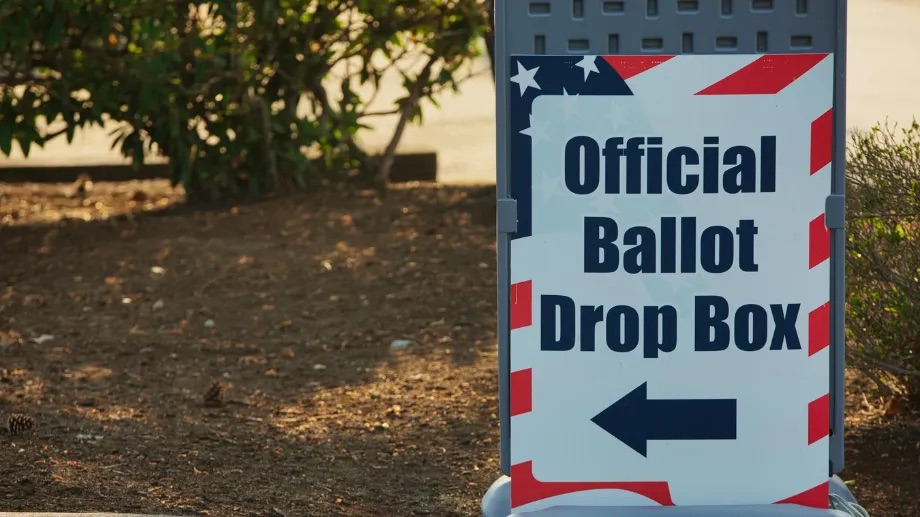
This image shows a clearly labeled “Official Ballot Drop Box” sign in a public area, surrounded by trees and natural ground cover. The sign is bordered with red, white, and blue patterns, symbolizing civic duty and patriotic engagement.
Let’s cut through the fog: calling conservatives “Nazis” is not only factually wrong, it’s dangerously ignorant. It’s a smear tactic used by some progressives and media pundits to shut down debate, morally disqualify opposing views, and stir outrage for political gain.
The problem? It’s not just dishonest. It also poisons the public square and undermines the memory of real atrocities committed by the Nazi regime. If everything is “Nazism,” then nothing is. We owe it to truth—and to history—to be more precise.
What Nazism Really Was
Before we unpack the slander, let’s recall what actual Nazis believed and did:
Established a one-party totalitarian state under Adolf Hitler
Promoted a racial ideology centered on Aryan supremacy
Waged world war and orchestrated genocide (the Holocaust killed six million Jews)
Used state propaganda, political violence, and a secret police to silence dissent
None of that aligns with modern American conservatism, which is rooted in individual liberty, limited government, free enterprise, religious freedom, and respect for constitutional order. But let’s look at how the accusation plays out—and falls apart.
In 2019, Rep. Alexandria Ocasio-Cortez compared ICE detention centers to “concentration camps.” The accusation was picked up by media outlets and spread like wildfire. The implication? That Republicans running immigration enforcement were somehow Nazis.
Here’s the reality: while U.S. immigration facilities can be overcrowded and flawed, they are not death camps. There is no systematic extermination, no racial purity laws, and no totalitarian ideology. Conflating enforcement of immigration laws with genocide is intellectually lazy and deeply offensive to Holocaust survivors.
2. Parental Rights = “Fascist Book Bans”
Conservatives advocating for parental control over school content have been labeled “book banners” and “fascists.” Critics claim that removing sexually explicit material from elementary schools is akin to the Nazi book burnings of the 1930s.
Let’s be clear: deciding whether graphic sexual material is age-appropriate for children is not fascism. It’s called parenting. Nazis burned books to suppress opposition thought. Today’s parents are simply asking for transparency and standards—hardly a hallmark of totalitarian rule.
3. Election Integrity Laws = “Jim Crow 2.0”
When Georgia passed voter ID and election reform laws in 2021, President Biden and other Democrats likened it to “Jim Crow on steroids.” MSNBC contributors went even further, comparing the laws to steps taken by the Third Reich.
But voter ID laws exist in countries across Europe and Africa. They do not prevent legal citizens from voting; they help secure the integrity of elections. Nazi Germany suppressed voting by banning opposition parties. Conservatives want secure voting by legal citizens. Big difference.
4. Gun Rights Advocacy = “Militant Extremism”
Every time a conservative defends the Second Amendment, some pundits rush to label it “domestic terrorism” or “militia extremism.” They equate gun owners with brownshirts.
In fact, the Nazi regime disarmed political opponents and private citizens. American conservatives support gun rights precisely to prevent tyranny and protect self-defense. The logic is inverted: defending liberty isn’t authoritarian—it’s the firewall against it.
5. Supporting Trump = “Modern Hitlerism”
This one’s become a go-to slur: if you voted for Trump, you must be a Nazi sympathizer. The “Hitler” comparison has been used so often, it’s lost all meaning.
Whatever your opinion of Trump, equating him with one of history’s worst mass murderers is unserious. It’s emotional propaganda, not argument. No genocide. No world war. No suspension of elections. Just hardball politics and culture war rhetoric—which, by the way, goes both directions.
The Real Danger: Weaponizing History
Weaponizing the term “Nazi” is not only unfair—it’s cowardly. It cheapens the suffering of Holocaust victims and shuts down honest disagreement. When you slap that label on your political opponents, you’re not engaging. You’re dehumanizing.
It’s also a deflection tactic. Instead of defending their own ideas, some on the Left resort to moral panic: “If you don’t agree with us, you must be evil.” That’s not democracy. That’s demagoguery.
So What Do Conservatives Really Believe?
Conservatives believe in:
Equal rights under the law—not special treatment by group identity
Law and order, not chaos and mob rule
Parental rights, religious liberty, and free speech
Smaller government, personal responsibility, and strong national borders
These are not Nazi ideals. They’re American ideals—many enshrined in the Constitution. You may not agree with them all, but let’s debate them like adults.
Final Word: The Label Doesn’t Fit
Not every conservative is perfect. Not every policy is flawless. But calling an entire political movement “Nazis” is not just inaccurate—it’s corrosive. If the Left wants to persuade Americans, they need to ditch the name-calling and start making better arguments.
Debate is healthy. Disagreement is necessary. But dehumanization? That’s the first step toward real authoritarianism—and it’s coming from the very people who claim to be fighting it.
Call to Action
If you’re tired of the double standards and lazy slurs, speak up. Share this post. Push back against false narratives. Refuse to be bullied into silence. The truth is stronger than outrage—and it’s time to restore integrity to the public square.
Join the conversation. Defend the truth. And stop the lie.






 Past The Static